One card. Every chain. Every asset.

Your crypto vault is now your payment card. TapCards is a self-custody card built in Argentina: the keys are made inside the card's chip and never leave it. Tap it to pay at a shop or scan a QR code in your phone, and the chip signs the payment on its own.

  • Live on Solana devnet; the same card works on any chain
  • Faster than the competition: signs in ~0.3 s
  • Room for 20 profiles per card, each with its own keys
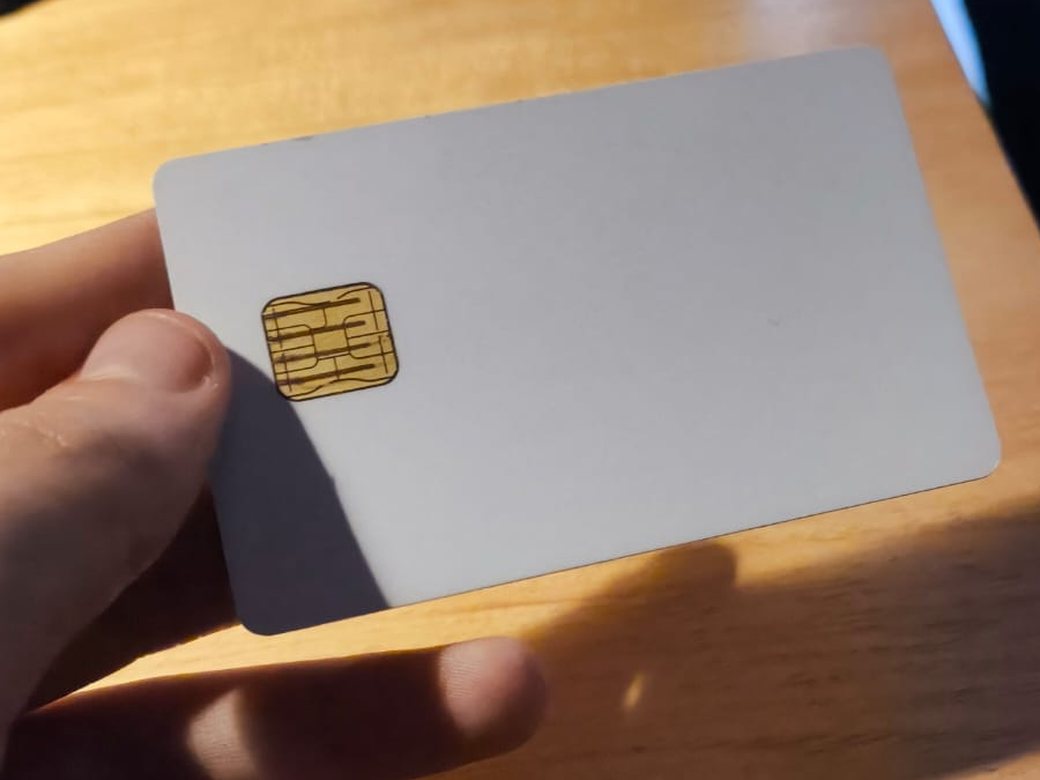
The TapCards card in a hand: a white smart card with a gold chip
The real card: an NXP JCOP chip running our applet.
AGJttUuVLxcQSELzLCWbvCusos3cEte9VF6zMKcjq7LN

Solana devnet address our card used on Oct 3. The payments linked here were signed by its chip, on chain, in about a third of a second.

Inside the card

Every wallet you own, sealed in one card

Apps that pay at shops hold your money or keep your keys on a phone. TapCards seals them in the chip.

A secure element in the chip

A sealed, certified part of the chip (EAL6+). The keys are created inside it and never leave, not even to your phone.

One card for every Solana and EVM wallet

Solana-style keys for Solana, and for Sui, Aptos and others that use the same kind. Ethereum-style keys for every EVM chain.

Room for 20 profiles, each with its own keys

Tangem's 20 accounts all come from one key and one backup. Each TapCards profile gets its own keys, made on the chip. One profile today; more are next.

Faster than the competition

Our card signs a Solana payment in ~0.3 s. Tangem quotes under 2 s from tap to signature; open-source card applets take ~1.4 s.

Sources: our card (NXP JCOP 4.5), Solana devnet transfers on Oct 3 2026 and free memory measured on Oct 4 2026 · tangem.com help center and learning hub (Multi-Accounts; "from tap to signed transaction: under 2 seconds") · github.com/autumn8/tapioca-javacard-applet

How it works

Scan, tap, done

No second card. No moving money between apps. The chip is what approves the payment.

1

Scan or type

A shop's QR code or a bank alias, in your phone.

2

Tap the card

Your key signs inside the chip. It never moves, never gets photographed, never touches the phone.

3

The shop gets paid

In pesos, through a licensed partner. The identity checks happen on that last step only.

Where it pays

The rails Latin America already uses

Argentina's QR codes and bank transfers today, through Cachin. Card terminals everywhere next, through a BIN issuer.

QR 3.0Argentina

Any shop's QR code. Every bank and wallet in Argentina can read every QR since 2021.

Live via Cachin (beta)

Transferencias 3.0Argentina

Pay or send to any bank account or alias, instantly.

Live via Cachin (beta)

PixBrazil

Brazil's instant payments, used by 91% of Brazilians.

Next

Visa / MastercardEverywhere else

Any card terminal. We're already integrating with a BIN issuer; we can't name it yet.

In progress

Bring your own railAny business, on our SDK

A business plugs its own payment rail into the TapCards SDK. The card signs, and the business settles on its rail.

In our SDK

Why now

Five things lined up at once

Savers keep their own dollars

Self-custodied stablecoins in Latin America grew 66% in a year. Spending them is still the hard part.

Every shop has the same QR

Since 2021, any wallet can pay any QR in Argentina, on the EMV QR standard. No new merchant hardware.

The rules just opened

Since April 2026, apps can offer payment accounts through a licensed provider, with central bank approval.

Chips can sign Solana

Our card signs in ~0.3 s, in hardware. Open-source alternatives take ~1.4 s in software.

Wallets want a card

Cachin, a Solana wallet for local QR payments that one of us also builds, already runs TapCards as its card. More businesses are testing it now.

Sources: Chainalysis, Latin America 2026 (Sep 2026) · Argentina's central bank: Transferencias 3.0 (Nov 2021), Communications "A" 6425 and "A" 8432 (Apr 2026) · github.com/autumn8/tapioca-javacard-applet · cachin.app

Where we are

What works, and what doesn't yet

Early stage. Here is the honest list.

Working today, on Solana devnet

  • The card signs Solana payments, including a full 1,232-byte transaction.
  • The POS app charges USDC by tap or chip on a payment terminal.
  • The phone wallet sets up the card and sends USDC or SOL.
  • Live in the Cachin app: QR payments and bank transfers.
  • The same card also signs on any EVM chain (Base, Arc, Tempo). Our focus is Solana.

Not yet

  • Mainnet.
  • Card terminals everywhere. We're integrating with a BIN issuer; we can't name it yet.
  • Pix, in Brazil.
  • A wide rollout. More businesses are testing the card now.

Who is building

Two electronic technicians

Joaquín Ernesto Graña
Computer Science student, Universidad de Buenos Aires
Joaquín Ricciteli
Electronic Engineering student, Instituto Tecnológico de Buenos Aires

Why us: Argentines pay with debit and credit cards every day, but crypto still feels foreign. A self-custody card makes it familiar, and no one here offers one. Building it takes cryptography and real hardware together, and we're both electronic technicians.

We wrote the card's applet, the SDK and both apps ourselves, in Buenos Aires. Joaquín Graña also builds Cachin, a Solana wallet for paying QR codes in Argentina.